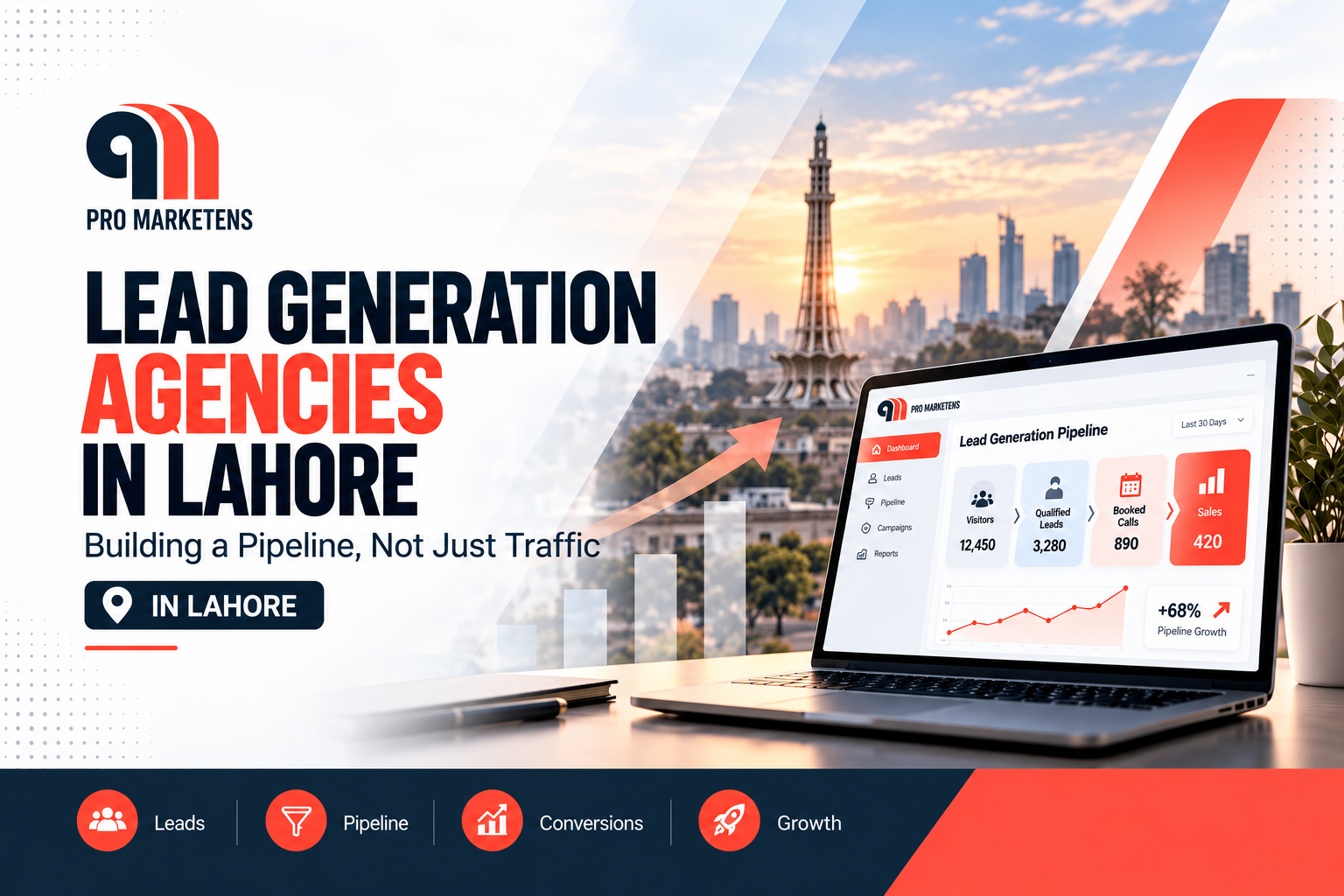
A business can receive 5,000 website visitors in a month and still have a sales problem. Another company may attract only 800 visitors and consistently generate qualified enquiries, booked meetings, and new customers. The difference is rarely traffic alone. It is what happens between the first click and the final sales conversation.
That distinction matters when businesses compare a lead generation agency Lahore based companies might hire. Increasing impressions, website sessions, or social media reach can support growth, but none of those numbers automatically create a sales pipeline. Lead generation becomes valuable when marketing attracts the right people, gives them a reason to respond, captures their information properly, qualifies their intent, and moves them toward an actual commercial conversation.
This is also where choosing the right digital marketing agency in Lahore becomes more important than simply choosing an agency capable of running advertisements. A real lead generation system connects acquisition, conversion, tracking, automation, and sales follow-up instead of treating each channel as a separate marketing task.
Traffic Is Only the Beginning of Lead Generation
Traffic is useful because every pipeline needs people entering it. The problem starts when traffic becomes the main performance indicator.
Imagine a Lahore based software company running Google Ads. The campaign generates hundreds of clicks, so the marketing report looks positive. But most visitors are students, job seekers, people looking for free software, or companies far outside the target customer profile. Technically, the campaign has produced traffic. Commercially, it has achieved very little.
Lead generation starts much earlier than the contact form.
It begins with understanding exactly who the business wants to attract, what those people are searching for, what problem they are trying to solve, and how close they are to making a purchasing decision. Proper audience and keyword research helps separate broad visibility terms from searches that indicate genuine commercial intent.
For a real estate company, that might mean distinguishing general property research from people actively looking to book a viewing. For a B2B manufacturer, it could mean targeting procurement related searches rather than broad informational keywords. For a professional service business, it may mean focusing on consultation driven searches where a potential customer already understands the problem and needs someone to solve it.
A lead generation strategy therefore should not ask only, “How much traffic can we generate?”
It should ask, “How much of that traffic has a realistic chance of becoming revenue?”
What a Lead Generation Agency in Lahore Should Actually Be Responsible For
A capable lead generation partner should influence considerably more than advertising.
The first responsibility is acquisition. This includes SEO, Google Ads, Meta campaigns, content marketing, LinkedIn where appropriate, remarketing, and other channels capable of reaching the intended customer.
The second responsibility is conversion. Sending good traffic to a weak page wastes both organic opportunity and advertising budget. Dedicated PPC landing page design should match the visitor’s search intent, explain the offer quickly, build confidence, answer common objections, and make the next action obvious.
The third responsibility is qualification. Not every person completing a form deserves the same amount of sales attention. Businesses need to know whether the prospect fits their target market, required service, location, budget, purchasing timeframe, or other important criteria.
The fourth responsibility is tracking. Marketing teams should know which search query, advertisement, landing page, campaign, or content asset generated a lead instead of grouping every enquiry into one generic number.
The fifth responsibility is follow-up. A qualified enquiry that receives no response for a day can easily become somebody else’s customer.
This is why a digital marketing agency for lead generation should be building a connected acquisition system rather than supplying disconnected marketing activities.
Qualified Leads Matter More Than Raw Lead Volume
One of the easiest ways to make a lead generation report look impressive is to increase the number of form submissions without paying enough attention to who is filling them out.
That approach usually causes friction between marketing and sales.
Marketing says it generated 300 leads.
Sales says most of them were useless.
Both teams may technically be correct.
A strong campaign defines what a valuable lead looks like before significant budget is spent. That definition might include business size, city, industry, required service, monthly budget, job role, purchasing timeframe, or another qualification factor depending on the company.
Forms can then be structured to collect enough information to improve qualification without becoming unnecessarily difficult to complete. Ad targeting can be refined. Negative keywords can remove irrelevant searches. Landing page copy can make the ideal customer clearer. Conversion focused copywriting can also discourage poor fit enquiries while giving serious prospects more confidence to take the next step.
This changes the conversation from cost per lead alone to cost per qualified lead.
A PKR 1,000 lead that never had a realistic chance of buying is more expensive than a PKR 4,000 lead that becomes a profitable customer.
The Right Channel Depends on How Customers Buy
There is no universal lead generation channel that works best for every Lahore business.
Google Search can be extremely effective when customers already know what they need and actively search for it. Someone searching for an immigration lawyer, commercial contractor, software development company, solar installer, or digital marketing service is already demonstrating intent. Well structured Google Ads campaign management can place a business directly in front of that demand.
SEO serves a different role. Rather than paying for every visit indefinitely, businesses build search visibility around the problems, services, comparisons, locations, and questions their potential customers research throughout the buying process.
Meta advertising can work particularly well where discovery, visual presentation, remarketing, or audience targeting plays an important role.
LinkedIn may make more sense for certain B2B offers where job role, industry, seniority, or company type helps define the customer.
Some businesses need all of these channels. Others may only need one or two.
A good lead generation company Pakistan businesses work with should select channels according to customer behaviour rather than forcing every client into the same media plan.
Landing Pages Are Where Expensive Campaigns Often Break
A campaign can have excellent targeting and still perform badly because the landing page fails to convert the visitor.
This happens frequently when paid advertisements send people directly to a generic homepage.
The visitor searched for one specific service, clicked an advertisement promising that service, and then landed on a page talking about everything the company does. Now they have to search through navigation menus, service sections, and general company information before finding what originally brought them there.
Every additional step creates another opportunity to leave.
High intent campaigns usually benefit from focused landing pages built around one audience, one problem, and one primary conversion action. The message in the advertisement should continue naturally on the page. Testimonials or relevant evidence should reduce uncertainty. Forms should collect useful information without creating unnecessary friction. Calls to action should make the next step clear.
This is where lead generation becomes closely connected to conversion rate optimisation.
Getting twice as many leads does not always require twice as much traffic. Sometimes the better decision is improving what happens with the traffic a business already has.
Follow-Up Is Part of the Pipeline, Not a Separate Sales Problem
Many companies spend heavily to create enquiries and surprisingly little effort designing what happens after those enquiries arrive.
A visitor submits a form.
The information reaches an inbox.
Someone notices it several hours later.
Another employee tries to determine who should respond.
By then, the prospect has already contacted three competitors.
That is not only a sales problem. It is a pipeline design problem.
A properly structured lead generation system should define where every enquiry goes, who owns it, how quickly the first response happens, and what occurs when the prospect does not immediately reply.
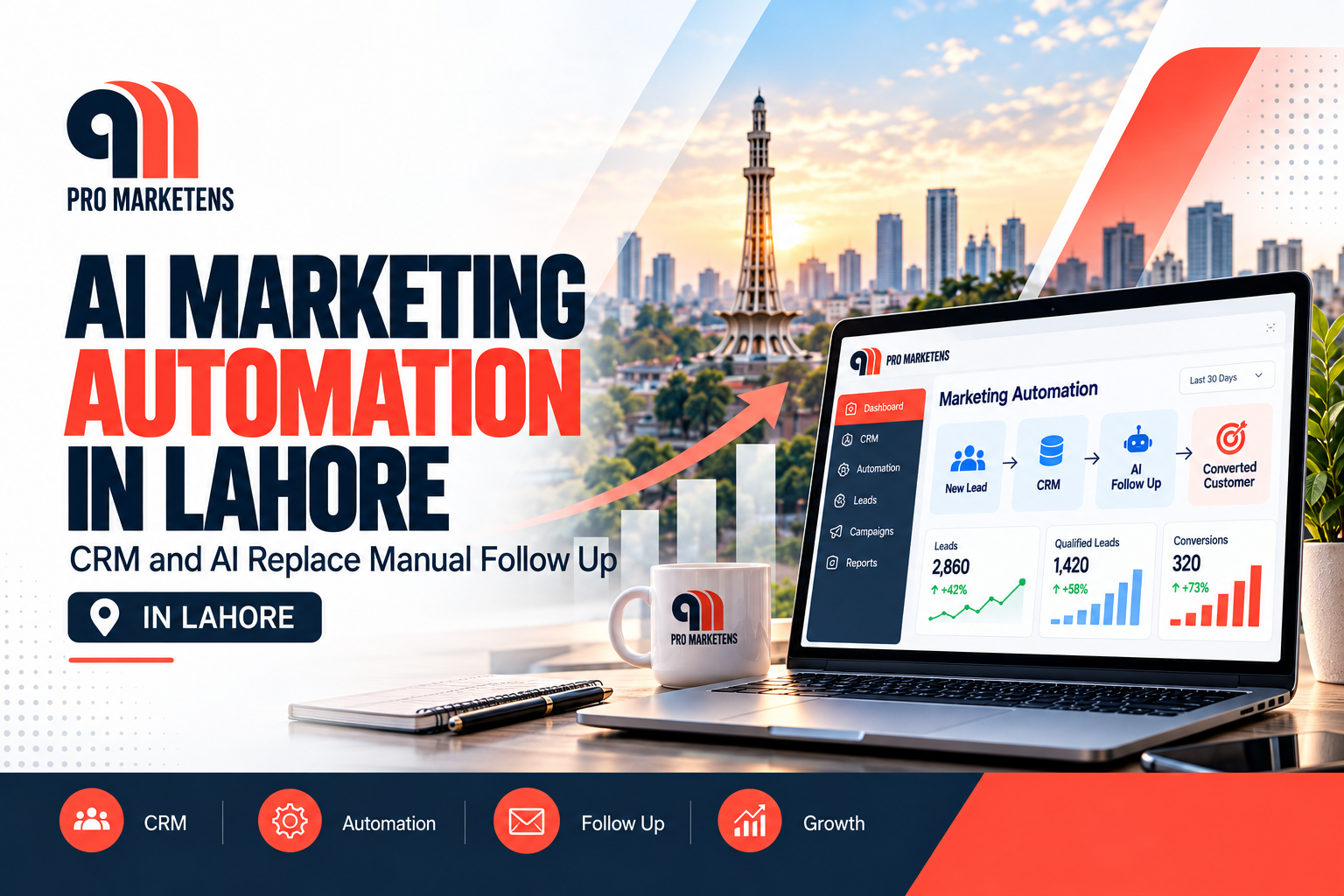
This may involve CRM integration, automated confirmation messages, WhatsApp follow-ups, email nurturing, appointment booking, lead scoring, or notifications for the sales team.
Automation does not mean removing human interaction. It means preventing valuable opportunities from disappearing because someone forgot to check an inbox.
SEO and Paid Media Should Feed the Same Pipeline
Another common mistake is separating SEO and paid advertising so completely that they behave like two unrelated departments.
They should be learning from each other.
Google Ads can reveal which commercially focused keywords produce qualified enquiries. SEO can then build stronger organic visibility around those themes.
Organic search can uncover questions and problems repeatedly researched by potential customers. Those insights can influence advertising messages, landing pages, and remarketing campaigns.
Conversion data can show which services generate stronger commercial outcomes. Content strategy can then give those areas greater priority.
A website SEO audit can also identify technical or structural issues preventing important service pages from gaining visibility, while paid search continues capturing immediate demand during the longer organic growth process.
Instead of asking whether SEO or paid advertising is better for lead generation, businesses should ask how both channels can contribute to the same revenue objective.
What Should a Lead Generation Company in Pakistan Actually Measure?
Clicks and impressions still matter, but they should sit much earlier in the reporting chain.
A commercially useful lead generation report should eventually connect marketing activity with outcomes such as enquiries, qualified leads, booked appointments, sales opportunities, customer acquisition cost, conversion rate, and revenue where sales data is available.
For longer B2B sales cycles, pipeline value may become more meaningful than immediate revenue because deals can take weeks or months to close.
This is particularly important for companies offering expensive services. A commercial construction company may only need a handful of genuinely qualified opportunities to create significant revenue. Measuring that business by website traffic alone would completely miss the point.
The purpose of reporting is not to produce a larger dashboard.
It is to help the business understand which marketing activities deserve more investment and which ones should be changed or stopped.
Different Businesses Need Different Lead Generation Systems
A dental clinic in Lahore does not need the same funnel as a software company selling internationally.
The clinic may depend heavily on local search visibility, Google Ads, phone calls, WhatsApp enquiries, and appointment booking.
A property developer may require Meta campaigns, Google Search, remarketing, project landing pages, and a sales team capable of qualifying investors quickly.
A B2B manufacturer may depend much more heavily on SEO, technical product content, Google Search, LinkedIn activity, quotation requests, and a CRM process designed around longer sales cycles.
An ecommerce business may not even define a lead in the traditional sense because the primary conversion is often a direct transaction.
This is why selecting a lead generation agency based only on the number of channels it offers can be misleading. The more important question is whether the agency understands how customers in that particular business actually move from awareness to purchase.
Questions to Ask Before Hiring a Lead Generation Agency
Before working with an agency, businesses should be able to get clear answers to several practical questions.
- How will you define a qualified lead for our business?
- Which acquisition channels will you prioritise and why?
- How will leads be tracked back to their original campaigns?
- Will you improve the landing pages as well as the advertisements?
- How will irrelevant enquiries be reduced?
- What happens after someone submits a form or calls?
- Which metrics will be reported beyond traffic and impressions?
- How will marketing data be connected with actual sales outcomes?
- What will determine when a campaign should be scaled?
The strongest answers should relate directly to the business model rather than sounding like a standard proposal reused for every client.
Building a Pipeline Instead of Buying Traffic
Traffic still matters. Rankings still matter. Clicks still matter.
But they are inputs.
The commercial outcome is what happens afterward.
Businesses that approach lead generation as a complete pipeline usually make better decisions because every part of marketing has a defined purpose. SEO captures and creates demand. Paid search reaches high intent prospects immediately. Landing pages convert interest into enquiries. Qualification protects the sales team’s time. Automation improves response speed. Analytics identifies which channels are actually contributing to revenue.
That is the difference between hiring someone to generate traffic and working with a digital marketing agency for lead generation capable of building a growth system.
For Lahore businesses, the goal should not be to collect the largest possible number of leads. It should be to create a predictable flow of the right opportunities and build a process capable of converting more of those opportunities into customers.
A pipeline built that way becomes more valuable over time because every campaign, keyword, landing page, and sales outcome provides information that can improve the next one.