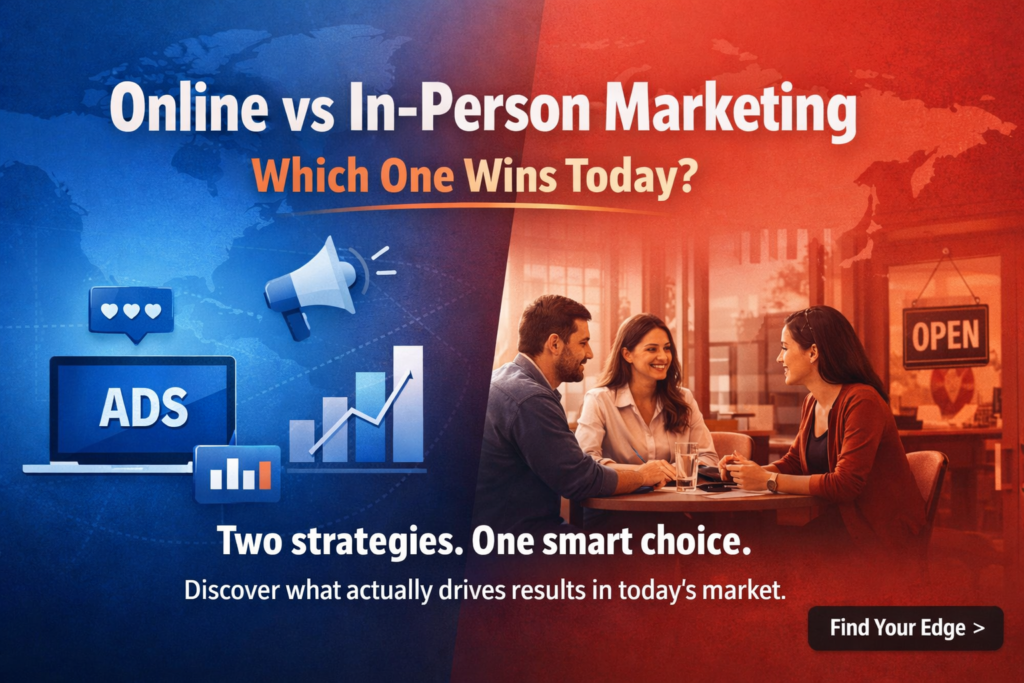
Marketing has never been a one-size-fits-all game, and in 2026 the gap between online and in-person marketing is wider than ever. Businesses are constantly deciding where to invest their time, energy, and budget to drive real sales. Promarketens works with brands that face this exact challenge every day.
Both approaches have strengths, weaknesses, and ideal use cases. The real question is not which one exists, but which one performs better for sales in today’s fast-moving, digital-first world.
Understanding Online Marketing in Today’s Business Landscape
Online marketing refers to promoting products and services through internet-based channels. These channels include search engines, websites, social media platforms, email campaigns, and paid ads. In 2026, online marketing and advertising have become essential for visibility and growth.
Brands now compete in a digital space where attention spans are short and choices are endless. Online strategies allow businesses to appear exactly where customers are already spending time. This instant access gives online marketing a powerful advantage in scalability and reach.
What In-Person Marketing Really Means in 2026
In-person marketing focuses on direct, face-to-face interactions with potential customers. This includes events, trade shows, retail experiences, product demos, workshops, and personal selling. Even in a digital age, human interaction still holds emotional value.
Customers often trust what they can see, touch, and experience. In-person marketing builds relationships that feel authentic and personal. However, its reach is limited compared to digital methods, especially in a globally connected market.
How Consumer Behavior Has Changed Over Time
Modern buyers research before they buy. Most customers now check reviews, compare prices, and explore brands online before making any decision. This behavior strongly favors online marketing strategies that provide instant information.
At the same time, customers value experiences more than ever. A strong in-person interaction can influence loyalty and repeat purchases. The challenge for brands is aligning both approaches with how people actually buy today.
Cost Comparison: Online vs In-Person Marketing
Budget plays a major role in choosing a marketing strategy. Online marketing often allows more control over spending, with clear tracking of results. Campaigns can be adjusted in real time to improve performance.
In-person marketing usually requires higher upfront costs. Venue booking, staffing, logistics, and materials can add up quickly. While the impact can be strong, the return is harder to scale compared to digital campaigns.
Reach and Scalability in a Competitive Market
Online marketing offers unlimited reach. A single campaign can attract customers from different cities, countries, or even continents. Businesses using online marketing courses and strategies can scale faster without geographical limits.
In-person marketing is limited by location and time. You can only reach those who physically attend your event or visit your store. While the interaction is deeper, the audience size remains restricted.
Speed of Results and Campaign Flexibility
Digital campaigns can go live within hours. Ads, content, and email campaigns start generating data almost instantly. This allows brands to test ideas quickly and refine their approach.
In-person marketing requires longer planning cycles. Events take weeks or months to organize, and changes are harder to implement once things are set. Speed often favors online marketing in fast-moving industries.
Trust Building and Human Connection
Face-to-face interaction creates trust faster than any screen ever could. In-person marketing allows real conversations, body language, and emotional connection. This is especially valuable for high-ticket or relationship-driven sales.
Online marketing builds trust differently. Reviews, testimonials, case studies, and consistent branding play a key role. With the right strategy, trust can still be strong, but it takes time and consistency.
Data, Tracking, and Measurable Performance
One of the biggest advantages of online marketing is data. Every click, view, and conversion can be tracked and analyzed. Platforms provide insights that help marketers understand exactly what works.
In-person marketing relies more on observation and feedback. Measuring exact ROI can be challenging. While surveys and follow-ups help, the data is often less precise than digital analytics.
Personalization at Scale
Online platforms allow brands to personalize messages for different audiences. Ads can be tailored based on interests, location, behavior, and demographics. This level of targeting drives higher conversion rates.
In-person marketing personalizes through direct interaction. While this feels more genuine, it cannot be scaled easily. Online tools offer personalization without needing physical presence.
Online Marketing vs Digital Marketing: Is There a Difference?
Many businesses confuse online marketing vs digital marketing, assuming they are the same. Online marketing focuses strictly on internet-based channels. Digital marketing is broader and includes offline digital tools like SMS or digital billboards.
Understanding this difference helps businesses choose the right strategy mix. Promarketens often educates brands on how to combine both approaches for maximum impact.
Digital Marketing or SEO: What Drives More Sales?
When choosing digital marketing or SEO, the goal is long-term growth versus short-term visibility. SEO builds organic traffic that grows steadily over time. It attracts high-intent users searching for specific solutions.
Paid digital marketing delivers faster results but stops when the budget ends. The smartest brands use both together to balance immediate sales and sustainable growth.
The Role of Online Marketing Courses for Businesses
Education plays a major role in marketing success. Businesses investing in online marketing courses stay ahead of trends and platform changes. Skilled teams make better decisions and avoid costly mistakes.
Learning how to analyze data, create campaigns, and optimize performance is essential in 2026. Knowledge has become a competitive advantage.
Industry Use Cases Where Online Marketing Wins
Some industries benefit more from online strategies than others. E-commerce, SaaS, digital services, and global brands thrive in online environments. These businesses rely on visibility, automation, and scale.
Online marketing and advertising allow them to test offers, reach niche audiences, and grow without physical limitations.
Industry Use Cases Where In-Person Marketing Still Shines
Certain industries still rely heavily on face-to-face interactions. Real estate, luxury goods, medical services, and B2B enterprise sales often require personal trust.
In these cases, in-person marketing supports relationship building and long sales cycles. However, it usually works best when supported by online presence.
Hybrid Marketing: The Smart Strategy for 2026
The real winner in 2026 is not one method alone. Hybrid marketing combines online reach with offline trust. Brands use digital channels to attract leads and in-person methods to close and retain customers.
Promarketens encourages businesses to integrate both strategies for consistent growth. This balance creates a seamless customer journey.
Customer Journey Comparison
Online marketing dominates the awareness and consideration stages. Customers discover brands through search, social media, and ads. Content educates and builds interest.
In-person marketing strengthens decision and loyalty stages. Personal interaction reassures customers and reinforces trust. Together, they form a complete funnel.
Sales Funnel Performance in 2026
Online funnels are automated, fast, and scalable. They work well for impulse buys and mid-range products. Clear calls to action drive conversions efficiently.
In-person funnels are slower but deeper. They work best for complex or high-value sales. Both funnels serve different purposes depending on the business model.
Long-Term Brand Building Impact
Online marketing builds visibility and authority over time. Consistent content and SEO create long-lasting brand presence. Customers recognize and trust familiar brands.
In-person marketing builds emotional memory. A great experience leaves a strong impression. The most powerful brands use both to stay memorable.
Which One Wins More Sales in 2026?
Pure numbers favor online marketing. Its reach, scalability, and data-driven nature generate higher overall sales volume. Businesses can grow faster and reach more customers efficiently.
However, in-person marketing wins in depth and loyalty. The highest-performing brands combine both instead of choosing one.
Final Verdict from Promarketens
Online marketing leads in sales volume, speed, and scalability in 2026. In-person marketing leads in trust, experience, and relationship building. The smartest brands don’t compete between them, they connect them.
Promarketens helps businesses design strategies that convert attention into revenue using the right mix of both worlds.
Frequently Asked Questions
Is online marketing better than in-person marketing for small businesses?
Online marketing is often better for small businesses due to lower costs and wider reach. It allows quick testing and faster growth.
Can in-person marketing still generate strong ROI?
Yes, especially for high-ticket or service-based businesses where trust is critical. It works best when paired with online visibility.
Should businesses invest in online marketing courses?
Absolutely. Online marketing courses help teams stay updated with tools, trends, and strategies that improve performance.
What is the main difference between online marketing vs digital marketing?
Online marketing focuses only on internet channels, while digital marketing includes both online and offline digital methods.
Is digital marketing or SEO more important for long-term sales?
SEO is crucial for long-term organic growth, while digital marketing delivers faster short-term results. Both are most effective together.